Address
Rhine Ok Market, Madhabdi, Narsingdi.
Work Hours
Monday to Friday: 9AM - 7PM
Weekend: 10AM - 5PM
Address
Rhine Ok Market, Madhabdi, Narsingdi.
Work Hours
Monday to Friday: 9AM - 7PM
Weekend: 10AM - 5PM

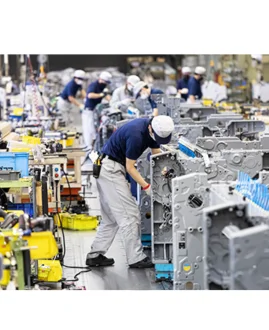
Preventive maintenance reduces unexpected machine breakdowns, saves energy, and extends equipment life—resulting in long-term cost efficiency. Reactive repair may seem cheaper initially, but it leads to higher downtime, production loss, and expensive emergency fixes.
Unplanned machine breakdowns are one of the biggest causes of production loss in textile factories across Bangladesh. When a critical machine like a stenter, sizing machine, or air compressor fails unexpectedly, production stops—and every minute costs money. While many factories still rely on reactive maintenance (repairing only after failure), successful manufacturing facilities are now shifting to preventive maintenance to avoid costly shutdowns.
Preventive maintenance (PM) is a proactive maintenance strategy that involves scheduled inspection, servicing, and replacement of machine components before failure happens. It is based on machine condition monitoring, lubrication routines, precision alignment, and timely servicing.
Scheduled inspection of bearings, belts, gears, and drives
Regular lubrication and cleaning routines
Temperature and vibration monitoring
Replacement of worn-out components
Alignment and calibration checks
Compressor and gearbox oil analysis
Documentation of machine performance trends
| Factor | Preventive Maintenance | Reactive Repair |
|---|---|---|
| Downtime Risk | Very Low | Very High |
| Production Loss | Minimal | Severe |
| Part Replacement Cost | Low (planned) | High (emergency) |
| Machine Life | Extended | Reduced |
| Safety Risk | Low | High |
| Maintenance Cost | Predictable | Unpredictable |
| Energy Efficiency | Improved | Poor |
Unplanned repairs may look cheaper at first—but they actually cost more due to production loss, emergency spare parts, overtime labor, and machine damage.
Factories that repair only after failure experience:
❌ Sudden production stoppage
❌ Higher scrap and fabric damage
❌ Lost delivery schedules
❌ High energy consumption
❌ Frequent bearing and gearbox failures
❌ Emergency maintenance cost
❌ Reduced machine lifespan
In today’s competitive export market, reactive repair is no longer a sustainable maintenance method.
✅ Continuous production flow
✅ Reduced machine breakdowns
✅ Longer roller, gearbox, and bearing life
✅ Lower energy consumption
✅ Better machine performance
✅ Easy spare parts planning
✅ Safety improvement
✅ Lower total maintenance cost
Factories that follow a PM strategy often save 20–30% on annual maintenance costs.
Implementing preventive maintenance does not require a complete system overhaul. It can start step by step:
List all critical machines (stenter, compactor, dryer, sizing, weaving, blowers, compressors)
Define service intervals based on machine usage hours
Create lubrication schedule using certified industrial lubricants
Add condition monitoring – temperature, sound, and vibration checks
Train maintenance team on best practices
Record maintenance logs to analyze machine behavior
Use OEM spare parts and correct tools
Preventive maintenance is not an expense—it is an investment in production efficiency. Textile factories in Bangladesh that shift from reactive repair to preventive maintenance enjoy consistent output, lower costs, and extended machine life. The most successful factories are not those with the newest machines, but those with the best maintenance discipline.
If you want to build a maintenance plan for your factory, we can help with expert guidance, inspection checklists, and sourcing solutions for industrial maintenance.

এখনই WhatsApp-এ মেসেজ করুন
